Marketing can be hard to explain. Even to a nine-year-old.
A child might think it’s just about commercials and ads. But anyone who works in the field knows it’s much bigger than that. It’s a system. And like any good system, it only works when all the parts do their job.
At Boost Zone Tech, we’ve seen that the old way of defining marketing—the five Ps doesn’t quite fit anymore. The world is more complex. Data moves faster. Channels change overnight.
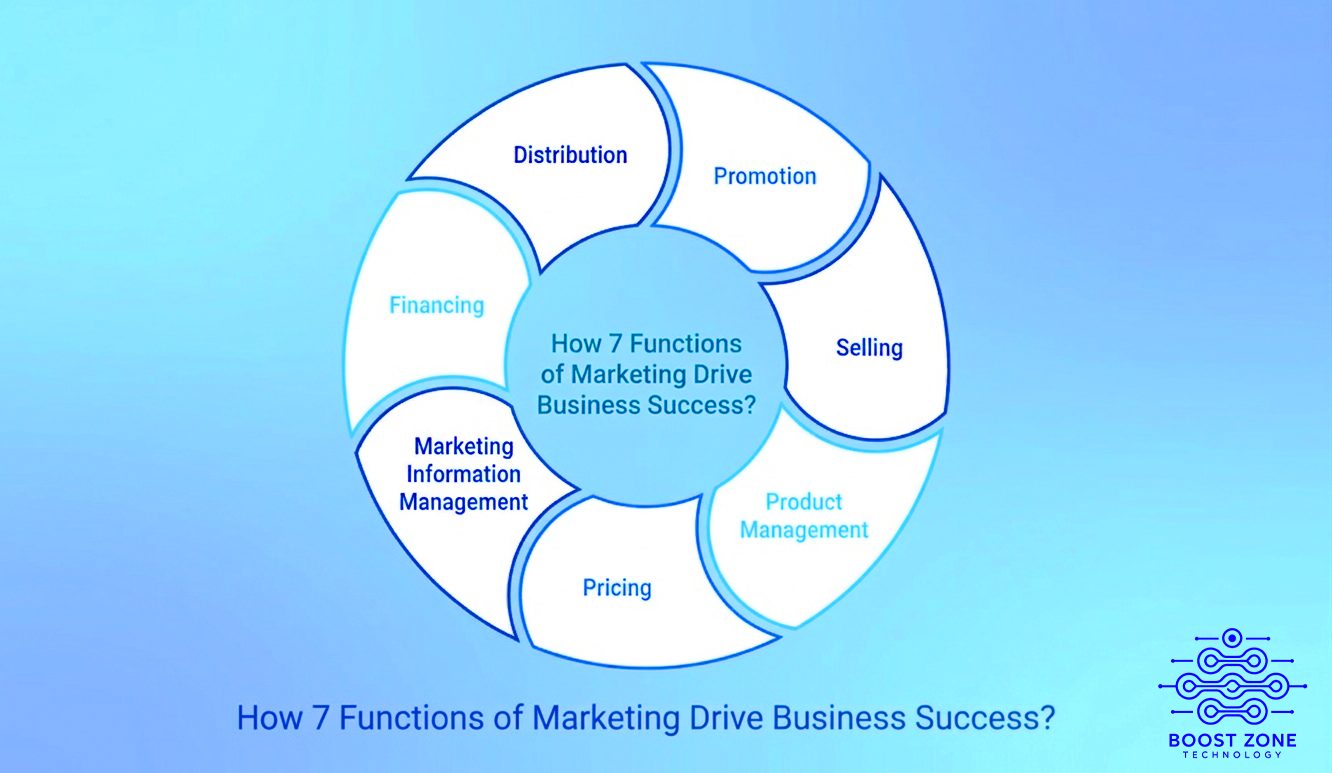
So, what does a modern marketing department actually do? It focuses on seven core functions. When you get these right, you stop doing random acts of marketing and start building a real growth engine.
Here’s how it works.
1. Product: Where Marketing Actually Starts
Marketing doesn’t start with a campaign. It starts with the product itself.
You can’t sell something people don’t want. If the product doesn’t solve a real problem or make life easier, no amount of ad spend will fix it. Good marketing begins by asking hard questions: Does this product help people? Is it better than what’s out there?
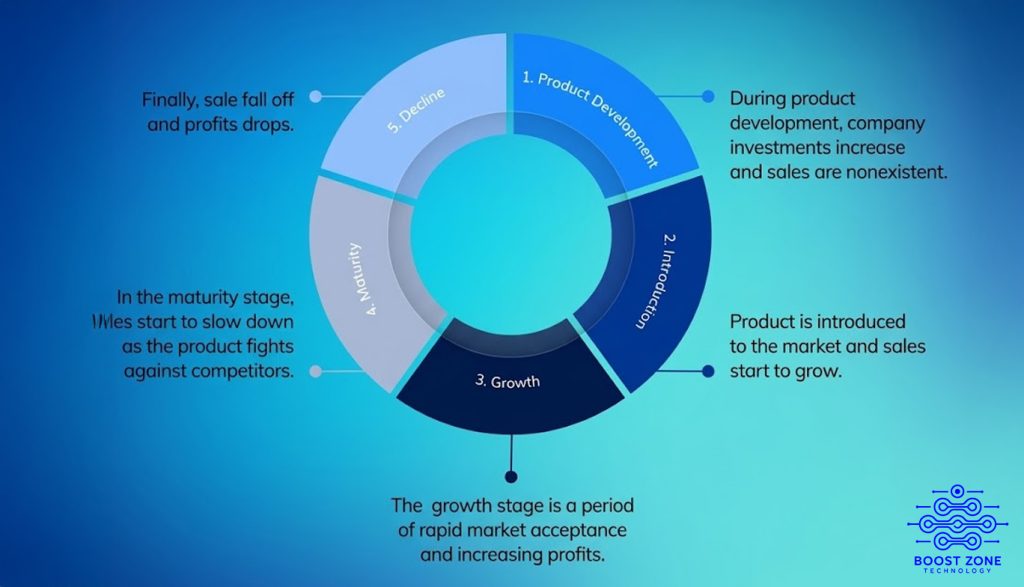
At Boost Zone Tech, we believe product marketing means looking at the user journey. It’s about finding the friction points and fixing them before you try to drive traffic. When the product is right, everything else gets easier. Distribution works. Promotion sticks. Trust grows.
2. Finance: Treating Marketing Like an Investment
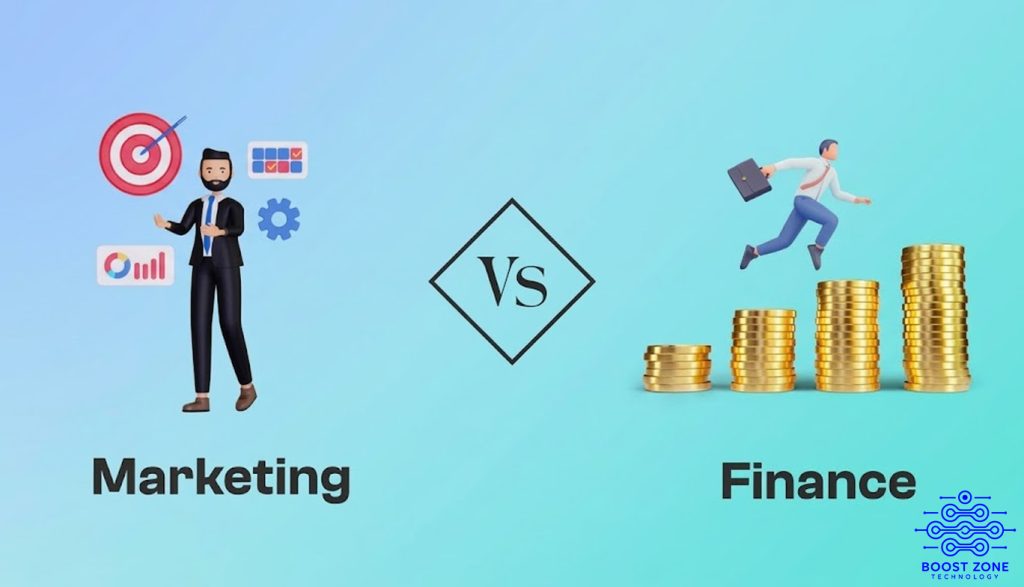
Marketing costs money. But it shouldn’t just be an expense on a spreadsheet. It should be an investment.
The finance function in marketing is about accountability. It’s knowing your return on spend. It’s understanding customer lifetime value (LTV) and knowing how much you can afford to spend to acquire a customer (CAC).
This isn’t about being cheap. It’s about being smart.
- Should you spend more on organic search because paid ads are getting too expensive?
- Is that influencer partnership actually driving sales, or just likes?
Finance keeps the team honest. It turns marketing from a cost center into a driver of growth.
3. Intelligence & Data: The Compass for Decisions
Guessing is risky. Data removes the guesswork.
Intelligence and data act as your compass. They tell you where to go and when to turn. But it’s not just about collecting numbers. It’s about finding insights that matter.

Vanity metrics—like how many people saw a post—can trick you. What matters is behavior. How do users move through your site? Where do they drop off? Which channels actually bring in customers who stay?
With the right data, you can predict trends and adjust your budget in real time. You stop reacting and start anticipating.
4. Brand: The Strategic Anchor
A brand is more than a logo. It’s a feeling.
It’s what people say about you when you’re not in the room. It’s the trust you build over time. In a noisy world, a strong brand cuts through the clutter. It makes your message consistent and credible.
Some companies ignore branding. They focus only on short-term sales. But that usually hurts them later. A weak brand has to fight for every customer.
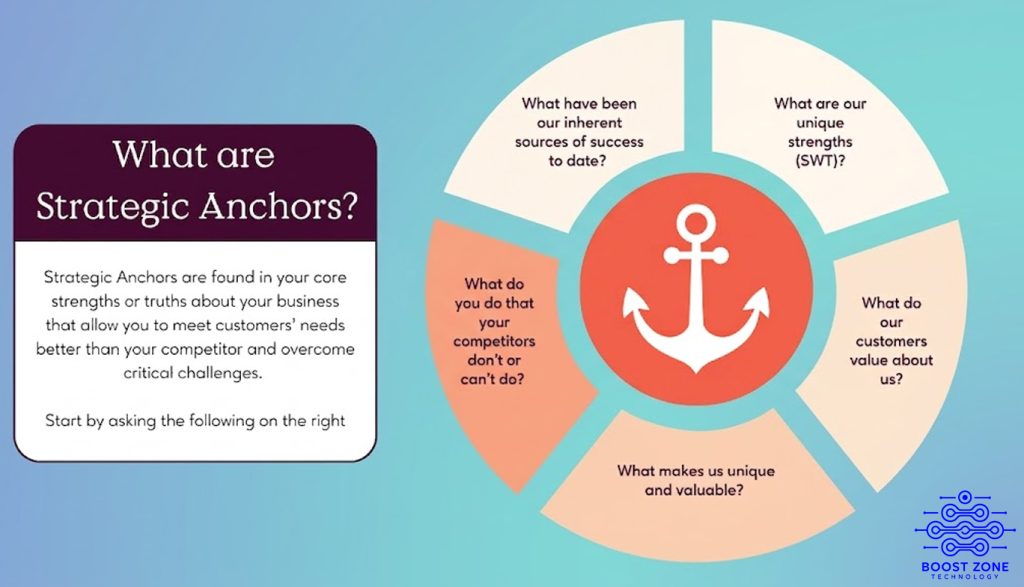
A strong brand makes the path to purchase shorter. When people know what you stand for, and they agree with it, they’re more likely to buy. They’re also more likely to come back.
5. Content: Fuel for the Engine
If brand is the anchor, content is the fuel. It’s how you tell your story.
Content takes many forms. A short video on social media. A long article on your website. A case study that shows how you helped a client.
The key is matching the content to the customer’s journey.
- Early on, they need educational blog posts.
- Later, they need case studies to build trust.
- At the decision point, they might need a demo or a free trial.
Good content doesn’t feel like an ad. It feels like value. It’s helpful, entertaining, or inspiring. And at Boost Zone Tech, we know that content needs to be measured. It has to perform, not just look good.
6. Distribution: Getting Seen by the Right People
You can create the best content in the world. But if no one sees it, it doesn’t matter.
Distribution is how you get your message in front of the right eyes. It’s a mix of:
- Owned channels: Your website, your email list, your app.
- Earned channels: PR, press mentions, word-of-mouth.
- Paid channels: Search ads, social ads, influencer partnerships.
The trick is balance. You can’t be everywhere at once. You need to know where your audience actually hangs out. Is it LinkedIn? Is it TikTok? Is it a search engine?
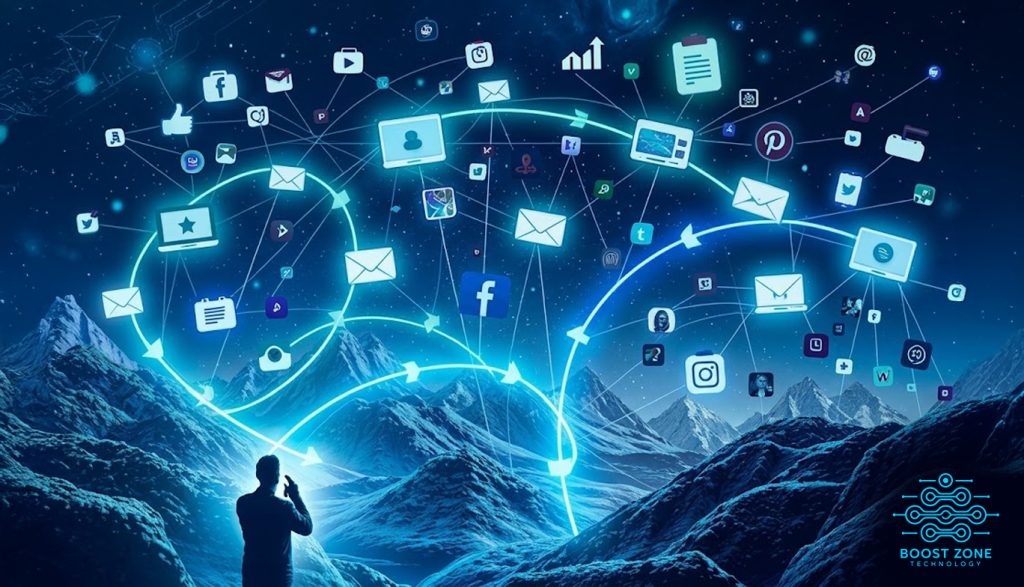
Distribution isn’t just about broadcasting. It’s about creating a feedback loop. You see what works, and you put more money there. You see what doesn’t, and you pivot.
7. Promotion: Turning Attention into Action
Promotion is what most people think of as “marketing.” It’s the ads, the campaigns, the events.
But effective promotion isn’t just about being loud. It’s about being strategic. It’s the bridge between awareness and action.
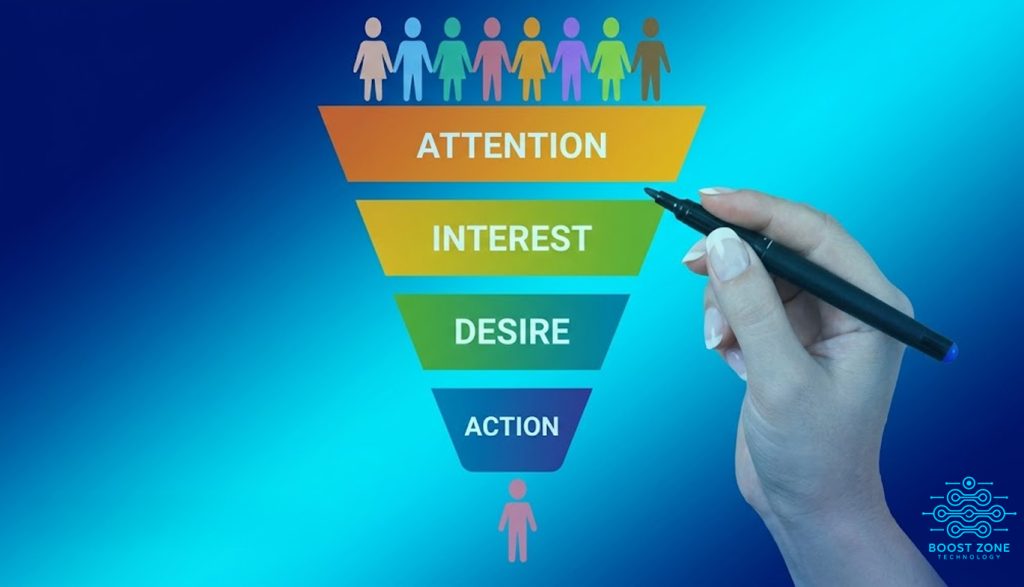
Promotion uses both paid and organic methods.
- Paid gives you speed and scale.
- Organic builds trust over time.
The magic happens when they work together. A viral video is fun, but it’s useless if it doesn’t lead to sales. A high click-through rate is nice, but it doesn’t matter if those clicks don’t convert.
Promotion works best when it’s tied to the product, backed by data, and supported by a strong brand.
Why These 7 Functions Matter
You might look at this list and see seven separate jobs. But they aren’t silos. They are gears in a machine.
When Product is strong, distribution gets easier.
When Brand is trusted, Promotion costs less.
When Data is clear, Content hits the mark.
When Finance is disciplined, Intelligence keeps everything on track.
At Boost Zone Tech, we’ve learned that growth happens when these functions connect. You can’t just focus on one and ignore the others. A great product with bad distribution goes nowhere. Great content with no data is just a guess.
The Takeaway
Marketing has changed. It’s more complex than it used to be. But by focusing on these seven functions Product, Finance, Intelligence & Data, Brand, Content, Distribution, and Promotion—you build a system that can handle the complexity.
You move from chaos to clarity. You stop wasting money and start building momentum.
And that’s how you build a real growth engine.